




From Store Targets to Customer Demand: Rethinking Retail Planning
For decades, retail planning was defined by a built-in tension. At the time, this wasn’t a flaw—it was simply how retail operated.
30 years ago, when I started in retail as a merchant planner, our department assigned one planner to merchandise financial plans and another planner to store plans. We each built plans to align as closely as possible with the board plan. On one side, merchandise planners built the business through product, defining how categories, classes, and assortments would deliver the company’s financial goals. On the other side, store planners built the business through location—assigning financial targets to individual stores based on historical performance and growth expectations.
Both plans ultimately served the same objective: delivering the board plan. The Board plan set the company’s overall growth expectation: a single annual target, expressed as a percentage growth over last year’s plan/actuals.
However, they approached that objective through fundamentally different lenses.
- One was product-first
- The other was store-first
What connected them was not integration, but control through top-line alignment.
Why this Model Worked at the Time
This wasn’t a flaw; it was a reflection of how retail operated at the time.
Twenty-plus years ago, the operating environment looked very different:
- Retail was store-centric – stores generated almost all the demand
- Inventory was constrained – inventory constraints limited what retailers could sell
- Data was limited – limited data, restricted insights into customer behaviour
Retailers couldn’t see demand in advance; they only understood it once customers entered the store.
Foot traffic, local execution, and in-store decisions were the primary drivers of performance. Retailers could measure outcomes, but had limited ability to understand or predict demand at the detailed level.
In that context, precision wasn’t the goal.
What mattered was driving alignment to a single financial outcome, even if the paths to get there differed.
The planning model worked. At its core, it prioritized control and alignment in an uncertain environment.
Two Lenses, One Blind Spot
Within this structure, each planning lens created its own complex view of the business – but only within its own frame.
Merchandise planning built the business from the product up:
- Forecasting sales and margin by class and category
- Managing inventory and open-to-buy
- Allocating investment across assortments
This approach provided depth at the product level—but with limited visibility into where demand would materialize.
Store planning took the opposite approach: Setting total financial targets by store
- Grounded in historical performance and growth expectations
It provided clarity at the store level—but without insight into what would actually drive that performance.
Each approach made sense on its own.
But they operated at different levels of detail – and never truly connected.
What one understood, the other could not see.
The result wasn’t just two perspectives
It was a structural gap.
How Alignment Actually Worked
The two plans eventually converged—but not by design.
The system did not build alignment.
Teams imposed alignment after the fact.
In practice, the planning process was iterative—but not truly collaborative. Each side worked its plan independently, then adjusted to close the gap. It was a win/loss plan, not a meeting of two minds.
- If the store targets were fixed, the merchandise plan was pushed down by the planners—forcing changes across categories, classes, and inventory.
- If the merchandise plan set the direction, planners reworked store targets—resetting expectations across the fleet.
These adjustments were complex, time-consuming, and often extended into the beginning of the season.
The outcome was not a shared view of the business. It was a convergence on a number.
Whichever plan landed closest to the board target typically prevailed. This ensured top-line alignment – but not accuracy.
The system produced a single answer but could not validate against real demand.
The Structural Gap
The limitation was not that the two approaches were different. It was that they operated at incompatible levels and never truly connected.
Merchandise planning worked at the category and class level
Store planning worked at the total store level
No mechanism linked product-level demand to store-level outcomes.
To bridge this gap, planners simplified stores:
- Treated as a single financial unit, or
- Fed with average product assumptions
Neither reflected reality.
Demand is not uniform across stores. Performance varies across product categories and by customer behavior. A store can overperform in one category, underperform in another, and appear average overall.
Without a way to capture that variation, planning lacked precision— teams made decisions without validating whether product demand and store performance truly aligned.
The system could produce a number, but it could not explain it.
The First Bridge: Clustering
Clustering introduced a more structured way to translate plans into store-level execution.
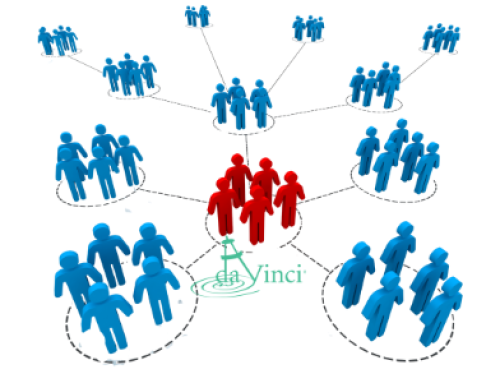
It enabled retailers to group similar stores—often at a category or class level for a defined time period—and understand how performance varied across those groups. Using an average store as a baseline, planners applied store volume weights to determine how much more or less inventory was required to support the cluster groups’ expected sales.
Retailers grouped stores using shared characteristics such as:
- Geography
- Demographics
- Climate
- Sales behavior
- Profitability
This created a middle layer between product and location, bringing greater consistency and improving decision-making:
- Planners made allocations more informed and trageted
- Assortments better reflected store characteristics
- Planning gained a more scalable, repeatable framework
Clustering strengthened the link between product and location.
For the first time, retailers could ask:
How does this category perform within this type of store?
The Break: Demand Has Moved Upstream
The most important shift in modern retail is this:
Demand is no longer store-driven—it is customer-driven.
Today, demand forms earlier, driven by customer behavior, digital interaction, and real-time influencers, all before a customer ever enters a store:
- Discovery happens on digital platforms
- Trends scale in real time
- Preferences are shaped by algorithms and influence
At the same time, retailers have decoupled fulfillment from location:
- Customers move across channels seamlessly
- Inventory flows across a network
- Transactions no longer reflect where the demand originated
A single purchase might be:
- Discovered on social
- Purchased online
- Fulfilled from a store
What appears as a store sale is often not store-originated demand.
Why the Old Model Breaks
This shift exposes a fundamental flaw:
Store performance no longer accurately reflects underlying demand.
Store results now reflect a mix of:
- Customer demand
- Channel behavior
- Fulfillment decisions
At the same time, demand signals originate at the product level:
- Trends emerge around specific SKUs and categories
- Growth is uneven across the assortment
- Customer intent is shaped digitally
Because store plans operate at a highly aggregated level, they cannot capture this variation.
The result is distortion:
- High-growth categories are constrained
- Assortments are shaped to fit top-line targets
- Investment is misaligned with actual demand
The store plan becomes a constraint—not a reflection—of demand.
The Shift: From Plans to Demand Systems
Retail companies no longer choose between store planning and merchandise planning. They are redefining it – a move toward a different model that is built on:
- Demand visibility
- Inventory transparency
- Integrated decision-making
The core question has changed.
It is no longer:
Should we plan from the store or the product?
It is:
How do we identify demand early, understand where it is forming, and fulfill it efficiently across a connected network?
Planning no longer reconciles two views of the business.
It is about building a system that continuously connects demand, inventory, and fulfillment.
Redefining the Role of the Store
This shift does not reduce the importance of the store—it redefines it.
- Demand is understood at the product level
- Planning happens within the merchandise framework
- Execution happens through clustering, allocation, and replenishment
Stores no longer define the demand. They are where it is realized.
Today, the store functions as:
- Fulfillment nodes
- Experience centers
- Execution points
The store’s role is no longer to interpret what will sell, but to:
- Deliver what is already in demand
- Fulfill it efficiently across channels
- Execute the experience
The New Planning Principle
Modern retail operates on a clearer foundation:
Demand should be planned where it is understood—at the product level—and executed where it is fulfilled—across stores and channels.
Final Thought
Historically, retailers needed both store and merchandise plans because neither could fully explain demand.
That limitation no longer exists.
Demand is now:
- Visible
- Measurable
- Influenced upstream
- Predictable at the product level
Competitive advantage no longer comes from choosing between store-first or product-first planning.
It comes from building a system that continuously connects:
- Demand
- Inventory
- Fulfillment
In real time.
And in that system, one truth becomes clear:
A total store number cannot meaningfully inform a product-level decision.
The merchandise plan is no longer one input among many.
It is the foundation.
And the role of the store is no longer to define demand—
but to execute it.
Related Product
daVinci Merchandise Planning
daVinci Retail’s merchandise planning solution enables retailers to build strategic financial plans which guide buy decision-making to deliver sales and margin goals.